All posts filed under: Animals

Nightswimming With Elephants

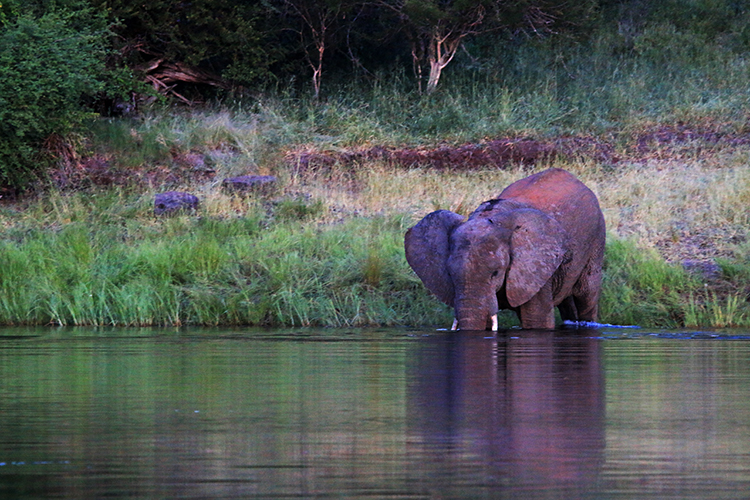
As published on Royal Chundu’s Blog. “I often think that the night is more alive and more richly colored than the day.” – Vincent Van Gogh The starry night without doubt transfixed the painter who once uttered the words above, and it captivates us no less. But even more enthralling, we think, is that time before the sun goes down. The truly alive, truly colourful time called dusk. On the open Zambezi, dusk presents itself each night in the most beautiful of sunsets. Sunsets we never tire from photographing in their unique nightly manifestations. It is during this cooler time of day that you can sometimes glimpse the odd herd of elephant down at the riverbank, engaged in a spot of skinny-dipping. They might have hoped that the dim light would shield them from us, but our camera lenses pulled it off and captured the nightswimmers in action from the sturdiness of our sunset cruise boat. Before the sky completely turned from purple to black and left us with nothing but the moon to guide us home, we snapped these images …
The Real Mystery of Wildlife Photography

Published here – Relais & Châteaux Africa Wildlife photographers are the impalas of the human world. They are everywhere. As you leave the airport, en route to the safari lodge, on the lawn at lunch, under the trees and across the plains on just about every game drive. Yes, many of these photographers are truly talented individuals with an impeccable eye, superb mastery of the machine, and, well, really good cameras. Many of us are guilty of using these connoisseurs of the camera as an excuse to not try our own hand at the art. If someone else can do it better, why bother? Perhaps you’ve never thought this. Perhaps you just don’t see the attraction of photographing wildlife. But like other art forms, photography is about so much more than the product. The whole process awakens us to the little wonders and idiosyncrasies of life – its quirks that often go amiss otherwise … Like the tight scrunch of a leopard’s nose. The twitch of a lion’s whiskers. The endless fly-eyes of the impala. The knees – or are they elbows – of the …

The Ubuntu Birds

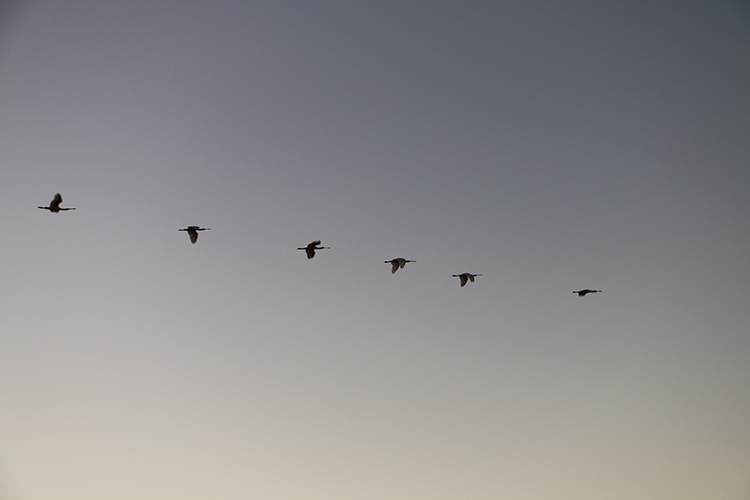
[Published here] “I once had a sparrow alight upon my shoulder for a moment, while I was hoeing in a village garden, and I felt that I was more distinguished by that circumstance that I should have been by any epaulet I could have worn.” – Henry David Thoreau To make up for not giving me siblings, my parents gave me pets. There was the Manx cat that slept in the tumble drier. The ginger tabby that trailed after us on walks around the neighbourhood. The dogs that let me dress them up in sunglasses and ties, that escorted me through the forest or along the beach. And then there were the birds. While my father’s father bred show pigeons, my father bred everything: quails, lovebirds, finches, Cockatiels, budgies and, most recently, an owl mother and her fledgling. On roadtrips, I might not have known the joy of sharing the backseat of the family car with anyone, but I knew my birds. I loved how they all seemed to have a place in the aviary …

The Season of the Whale

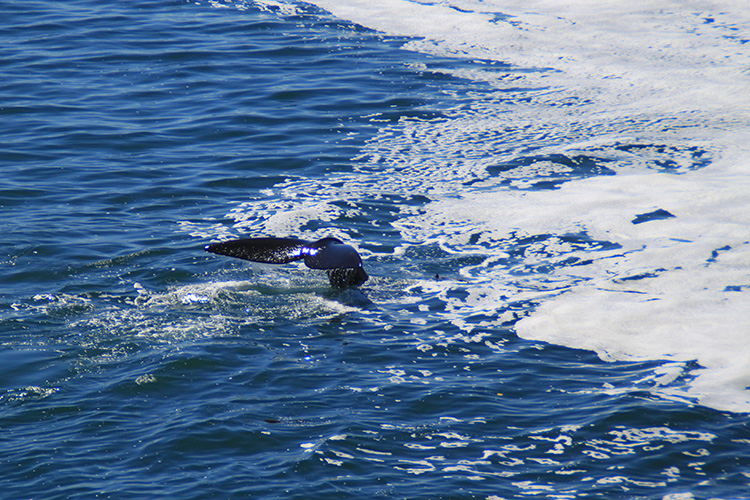
Read the full article here. The truth about whalesong is like much in life. Elusive, if not wholly unknown. We can philosophise and theorise but the truth about the enigmatic voices of whales and dolphins evades us. Nobody knows its true purpose or meaning. As the BBC documentary below states, “Scientists may one day find out the whole truth behind these extraordinary voices of the sea, but for now the private life of these ocean giants remains wondrously mysterious.” All we can do is look on, watch these creatures on their cross-oceanic journeys, from land, water or air. We can deduce a little more from their body language, their lobtailing and spyhopping and breaching. But between the fact and fiction of their wonder, all we have to do is be amazed by the simple joy of something we cannot fully grasp.   In African waters, you can glimpse whales on the east and south-east coast of South Africa on their own version of the Great Migration. On the east, they often flock to the Sardine Run, from May through to July, as captured on film …

Life Lessons From Leopards

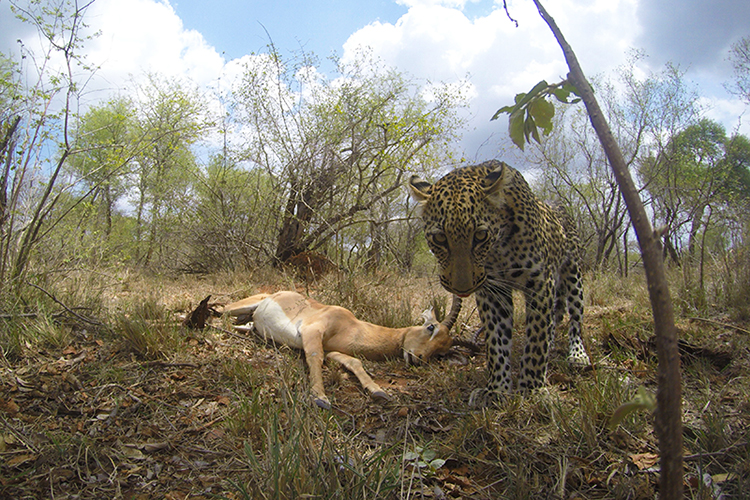
[published here] She did not want to be found. Were it not for the herd of impalas surrounding her, she wouldn’t have been. The young female leopard’s spots made her almost undetectable behind the low branches of the bush, as she hunched over her kill – the impala that didn’t get away. The herd, as if tattletaling on the leopard, barked loudly to alert others of the danger. We followed the call in our safari vehicle in the Kapama Private Game Reserve around Camp Jabulani, and locked eyes with the big cat through the trees. About ten metres from us, she sat unmoving, heavy panting and startling eyes giving away the life inside her. One of us shifted in the vehicle (not the experienced ranger), trying to focus the camera lens on the cat, but spooking the leopard in the process. The leopard darted instantly, leaving her prey behind. We idled the vehicle a little closer to the site of the kill. To get a better look at the leopard we had to be just as stealthy as this big cat. We placed a GoPro camera beside the lone impala and continued on our way. A …